One of the most misunderstood procedures in dentistry is root canal treatment. If your dentist recommends this procedure, you might be quick to turn to the internet or other sources to learn about it. Unfortunately there is a lot of unreliable information out there, which can scare you away from needed treatment.
There are some common myths that circulate about root canal therapy. Instead of avoiding treatment, learn the truth about this procedure that may be the most effective way to save a damaged tooth.
Myth: Root canal treatment is very painful.
Truth: This procedure often serves to relieve pain instead of creating it. With the anesthetics and sedation dentistry available today, in most cases the procedure feels like simply getting a filling.
Myth: You don’t need root canal treatment unless you are experiencing severe tooth pain.
Fact: Pain is not always present when root canal therapy is advised by your dentist. A tooth that has died may no longer trigger pain, but treatment is necessary to eliminate infection and save the tooth. Diagnostic tests are available to help your dentist diagnose tooth problems even when pain is not present.
Myth: The benefits of root canal treatment are short-lived.
Fact: This treatment provides durable and long-lasting results, potentially for a lifetime. Since the tooth is usually topped with a crown, it can be protected indefinitely.
Myth: Root canal treatment causes illnesses.
Fact: This is one of the most common misconceptions you might run across on the internet. Based on very old research that has been proven to be wrong, the myth still exists that root canal therapy might cause various diseases. Instead, root canal treatment is safe and only improves your oral and overall health.
Myth: Tooth extraction is an adequate alternative to root canal therapy.
Fact: Dentists agree that saving your natural tooth is almost always preferred over a traumatic procedure like tooth extraction. The benefits of keeping your restored real tooth are better than having a hole in your smile or requiring tooth replacement solutions.
Schedule your appointment at our Fernandina Beach dental office
If you are about to undergo root canal treatment to save a compromised tooth, your oral surgeon or dentist will likely provide you with a list of aftercare instructions. It is vitally important that you follow these recommendations to avoid complications and ensure the success of your endodontic treatment.
There are a few tips you can follow to speed up your recovery time, promote healing, and prevent serious dental problems and infections following root canal treatment:
- Do not chew on the treated side of your mouth until all of the numbness from the anesthetic has worn off completely.
- To manage swelling, apply an ice pack or bag of frozen peas on the treated area for thirty minutes. Repeat once an hour for about fifteen minutes each time until swelling subsides.
- For several nights after treatment, keep your head elevated while sleeping.
- Gently rinse your mouth with warm salt water regularly for the first few days after root canal treatment.
- Refrain from smoking for a minimum of 24 hours and try to curb tobacco usage as much as possible during the healing period.
- Avoid strenuous physical activity or exercise for 48 hours after your root canal procedure.
Contact your dentist immediately if you experience any excessive swelling or pain, the appearance of a rash or hives, or a return of original symptoms. By listening to the recommendations of your dentist, and following these extra tips, you can assure yourself the best chance of a rapid and complication-free recovery from root canal treatment.
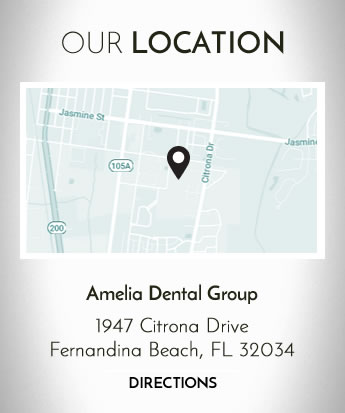
Our dental office is located in Fernandina Beach
Pain, sensitivity, and trouble eating or sleeping are only a few of the uncomfortable symptoms of a damaged tooth. Sometimes the inside portion of a tooth, or its pulp, becomes so damaged that action must be taken. It could come in the form of extracting the tooth or it might be able to be saved through root canal treatment.
Virtually every dentist recommends root canal therapy over tooth extraction. It’s almost always better to save your natural tooth. Otherwise, you’ll end up with a hole in your smile and the problems that accompany it.
A tooth can be damaged for a variety of reasons such as severe decay, trauma, or deep cavities. The damaged pulp contains nerves, which is one reason that many patients experience severe pain. Although dental fillings can remedy some cavities or decay, when the situation advances to the extent of harming the tooth pulp, fillings are not enough. Root canal treatment is usually the best way to repair the tooth without having to pull it.
A root canal procedure involves drilling into the tooth so that the pulp can be completely removed and the canal thoroughly cleaned. Then the area is filled with special material and sealed to prevent future damage. Often, a dental crown is placed on top of the restored tooth to provide added protection. This process alleviates any symptoms and give you back your fully functional, natural tooth.
If you were to opt for tooth extraction instead of root canal treatment, you’d be choosing a more invasive approach. The procedure can be intrusive, time consuming and costly. Recovery from tooth extraction can be uncomfortable and take longer than root canal therapy. Careful oral hygiene is necessary after extraction to avoid infection or complications. You’ll also be left with an unappealing hole in your smile that can make eating and speaking more difficult, and your other teeth will likely start moving into that empty space.
To determine the best treatment for you, consult a reputable dentist. You’ll learn about the options and how root canal therapy may be the best choice in restoring your oral health and your smile.
Our dental office is located in Fernandina Beach