Fear can stop come people from doing certain activities, and sometimes it may impact a person’s health and overall wellbeing. One example is visiting the dentist. You might be surprised at the number of people who completely avoid dental care because they are afraid. As a result, sedation dentistry has become a popular way to allow nervous patients to get the necessary treatment without all of the negative vibes.
Sedation dentistry involves administering drugs to help patients relax. There are various levels of sedation available, depending on the patient’s needs, procedures, age, and medical history. Your dentist can help decide which sedation amount and method is most appropriate for you. It ranges from light sedation to simply take the edge off, moderate sedation that renders you unaware but still awake, or deep sedation that practically puts you to sleep throughout treatment.
There are also a variety of methods for sedation dentistry. Oral medications are swallowed, nitrous oxide gas is administered through a mask over your nose, or medications can be given through an intravenous needle directly into your veins. The method is recommended based on each patient’s needs and situation.
Dental sedation manages pain so that you won’t feel anything during treatment. Most patients do not remember much about what occurred while under sedation. That is especially beneficial for patients with dental fears, because they are more willing to return for future appointments since they don’t have any bad memories from the last one.
Sedation is safe and effective when performed by a trained dentist. Make sure that any dentist who administers your dental sedation is qualified and experienced with the techniques. There is no reason to avoid dental checkups and treatment due to fear or anxiety. It is much better to get care to correct problems before they worsen, or head them off before they start. Sedation dentistry enables patients to comfortably and safely obtain treatment and eliminate dental fears.
We treat patients from Fernandina Beach and the surrounding area
If you are about to undergo a dental therapy that necessitates the use of sedation dentistry, especially IV sedation, there are definitely some important questions you should ask your dentist prior to the procedure. Remembering to ask these questions can be difficult, especially if you are feeling anxious or ill at ease with regard to the treatment.
Use this guide to give you some of the most important questions you might not have thought of or remembered to ask:
- What type of sedation will I be receiving?
- What risk factors – even rare ones – are associated with this type of sedation?
- How long will the treatment take, and during how much of that time will I be sedated?
- How will the sedation be administered?
- Who will give me the sedation and monitor it during my treatment?
- What safety measures do you have in place in case of any medical emergency?
- What would happen in the case of a cardiac emergency or a seizure?
- Who is trained in CPR and other life-saving skills?
- What kind of preparations do I need to make prior to my treatment?
- Should someone accompany me to be present during the treatment?
- How soon following treatment will I feel awake and alert?
- May I drive myself home afterward?
- What kind of pain can I expect after my treatment?
- How will I manage my discomfort?
- What kind of aftercare does my particular treatment require?
- What signs should I look for that would lead me to contact you for a follow-up?
Talk to Fernandina Beach sedation dentist Dr. Kitson, Dr. Bietenholz, Dr. Garrett, and Dr. Mokris to get the answers to questions like these and any others you may have prior to receiving sedation dentistry.
Sedation dentistry provides a way for those who experience anxiety or fear about visiting the dentist to get the treatment they need. It is also helping in relieving pain, and enabling more dental work to be performed in one visit. Two common methods of administering sedation are oral and intravenous (IV). Each type has its own unique characteristics and attributes.
Oral sedation involves swallowing pills or liquids. There are no shots, which is good news for patients afraid of needles. However, oral sedatives are less predictable because each medication affects people differently based on age, weight, medical history, and more. Also, there is a time delay between swallowing it and taking effect. Since the medication is absorbed through digestion, it is difficult to alter the sedation level quickly during treatment. Nearly all patients respond well to oral sedation, with few occurrences of any side effects. Patients typically don’t remember anything that occurred during treatment.
IV sedation means that the medication goes directly into the blood stream though an IV injection. A very powerful method, the effects are instant once the shot is given. If the medication begins to wear off, more can be administered through the IV for immediate results. IV sedation is very common during oral surgeries, which benefit from the ability to alter the medication dosage as needed. It is advantageous for long procedures or when multiple treatments are being done in one sitting. Patients will not remember the procedure or sometimes even the appointment at all. The biggest drawback of IV sedation is for patients who dislike needles. IV sedation requires that the dentist have special training and certification, so make sure that your dentist is qualified if this method is offered.
Both types of sedation can be effective depending on the situation and patient. Discuss your case with your dentist to help you decide which one might be the best for you.
Schedule your appointment at our Fernandina Beach dental office
Many types of cosmetic dentistry procedures such as crowns, bridges, tooth implants, or other invasive procedures require some kind of anesthesia in order to be performed in comfort for the patient. Even a procedure like porcelain dental veneers can be aided by the addition of some kind of sedation dentistry, especially if the patient is experiencing anxiety or fear regarding the treatment. For any patient seeking a more relaxed cosmetic dental experience, sedation dentistry presents several options.
Inhaled sedation, or nitrous oxide, is more commonly known as “laughing gas.” It is inhaled via a mask and is controlled by your dentist. It is a light sedation, and allows you to remain completely responsive and compliant to instruction. Nitrous oxide sedation wears off quickly; because of this, you may be able to drive yourself home after your treatment.
Conscious oral sedation reduces your anxiety while still allowing for responsiveness to requests and directions. Oral sedatives are typically prescribed in pill form, and can be taken up to an hour before your dental procedure. Some dentists believe that taking a mild oral sedative the night before treatment can alleviate anxiety and ensure proper rest. You should not drive yourself home if you have taken an oral sedative for your dental treatment. You will not be fully alert.
IV sedation is also known as “sleep dentistry.” It provides the most relaxed dental experience, allowing you to be deeply sedated while never completely unconscious. A natural effect of the drugs is full or partial memory loss of the time during its use, so you may have no memories of your procedure. You should never drive following IV sedation, and you may not be fully alert for several hours. Plan to go home, rest, and sleep.
Your cosmetic dentist wants you to be comfortable throughout your dental therapy and will know which sedation dentistry option is right for your particular cosmetic dentistry procedure. Talk to your cosmetic dentist today about any concerns you have regarding your treatment so that you may have the most positive, pain and anxiety-free experience possible.
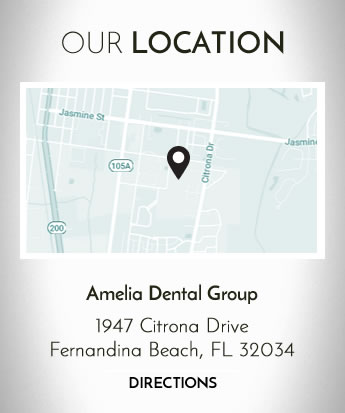
Our dental office is located in Fernandina Beach
Sedation dentistry is designed mainly to focus on patients experiencing fear and anxiety related to dental treatment; however, it is also an excellent choice for other patient types. Following are the main groups who experience relief and comfort from sedation dentistry:
- Patients experiencing anxiety and fear or a dental phobia
- Patients possessing an acute gag reflex
- Patients who have special needs
- Patients with physical issues that affect movement
- Anxious or fearful pediatric patients
Dental professionals want a patient to be as stress-free as possible immediately prior to and during a dental visit. Relieving anxiety and fear can turn an unpleasant, stressful experience into a comfortable visit, resulting in a desire to continue dental health and hygiene by returning for regular examinations and procedures.
An acute gag reflex can leave a patient concerned about vomiting during a dental procedure; in fact, many procedures such as taking impressions or working on the back teeth may be impossible. Sedation dentistry helps patients greatly reduce this gag reflex issue, as it is often exacerbated by anxiety and fear.
Patients who have special needs related to autism, Down Syndrome, or a mental or emotional problem may have real difficulty during dental visits. Other patients may deal with physical conditions such as cerebral palsy, Parkinson’s disease, or other disorders of the central nervous system. Patients in this group may have difficulty following instructions or remaining still. Sedation dentistry solves issues of involuntary muscle movements, allowing the dentist to safely and quickly complete treatment.
Fearful children can be problematic for dentists. Children who cannot be still, comply with instructions, or stop crying can cause time-consuming safety issues. Sedation dentistry allows a dentist to perform treatments without physical restraints that could cause emotional trauma to the child, leading to adult dental phobias and fears.
Visiting the dentist and caring for your dental health should be comfortable. Contact our dental office to see what can be done to make your visit as stress-free as possible using sedation dentistry in Fernandina Beach.
Sedation dentistry allows patients with dental anxiety to undergo procedures painlessly and without fear. While dental sedation is considered extremely safe, any time a patient is undergoing anesthesia there are risks associated with the procedure. The first and most important step in ensuring the safety of dental sedation is to find a qualified and appropriately trained sedation dentist. It’s important to ask how many sedation procedures your dentist has performed, as well as they type of training they have received.
Once you have identified an experienced sedation dentist, they will determine if you are a suitable candidate for sedation. Patients who are obese or have other conditions such as obstructive sleep apnea are more prone to complications from anesthesia and may not be viable candidates for sedation. Your sedation dentist should review your general health and medical history to determine if you are at a higher risk for complications while under sedation.
Discuss with your dental professional the type and amount of sedation you will be receiving. Your sedation dentist should provide you with information about the risks of the procedure, and be available to answer any questions or concerns you have about the planned sedation. Finally, your vital signs should be monitored during sedation, and your dentist should have oxygen and drugs that reverse the sedation effects available during the procedure.
When properly administered by an experienced sedation dentist, dental sedation can be a safe and effective tool for managing your dental anxiety. Sedation dentistry allows you to receive the oral healthcare you need without pain or undue stress.
If you are considering sedation dentistry in Fernandina Beach, contact our office today to schedule a consultation.